North China Institute of Science & Technology-University of Emergency Management (East of Beijing)
North China Institute of Science & Technology-University of Emergency Management
An Overview of NCIST
North China Institute of Science and Technology (NCIST) is a higher learning institution affiliated with the Ministry of Emergency
Management. NCIST serves and supports emergency management of the whole country and it has developed a multi-level and integrated education system that includes a master’s program, an international student program, adult education programs, and short-term training programs, with an emphasis on undergraduate education.
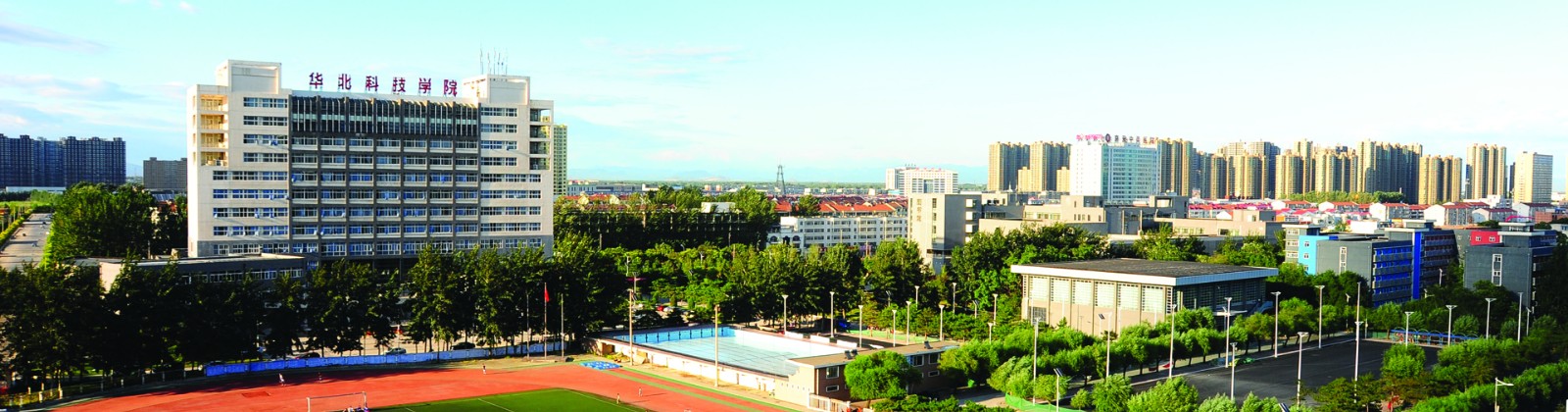
In January 2026, the inaugural ceremony for the University of Emergency Management was held, marking the formal merger of the North China Institute of Science and Technology and the Institute of Disaster Prevention to establish the university.
The university is located in Yanjiao, in the National-Level High-Technology Zone, and to the east of Beijing. NCIST currently has 1 National Engineering Practice and Education Center, 5 key laboratories at the ministerial level, 8 key laboratories, centers, teaching and training bases at the provincial and ministerial level. NCIST has 15 schools and 1 department and the enrollment population of full-time students is around 17,000. The university offers 60 undergraduate programs covering 8 disciplines including engineering, management, liberal arts, science, law, economics, education and arts. NCIST currently has 3 first class majors and 3 characteristic majors and 2 high quality courses at the national level. The university has 3 pilot majors of "Excellent Engineer Education and Training Programs" approved by the Ministry of Education of China. Safety Engineering and Mining Engineering have passed Engineering Education Professional Accreditation.
Currently NCIST has over 1,000 full-time teachers. More than 52% hold the rank of Associate or Full Professor and over 92% hold master or doctoral degrees. The university engages 2 external academicians. Among the teaching staff, 3 are listed in the “Millions of Talents Project in the New Century” at the national level, 5 professors enjoy special government allowances and 8 are listed in the “Support Program for New Century Excellent Talents” by the Ministry of Education.
In the past five years, the university has newly established more than 830 scientific research projects, including 6 national key research and development projects, 3 national social science foundations and 23 national natural science foundations. The total fund amounts to 538 million yuan. NCIST has won 66 science and technology awards at the provincial and ministerial level. 279 academic papers and publications are included in EI, SCI and CSSCI and 276 invention patents have been obtained. Moreover, faculty staff have participated in drafting national standards, industrial standards, and provincial standards up to 15 times.
NCIST aims at the forefront of the world and greatly values international cooperation. Through the years, the university has successively cooperated with over 50 universities and institutions in more than 20 countries including the United States, the United Kingdom, Canada, Australia and Latvia, etc. to train professional talents through various forms. The university employs more than 40 foreign instructors and various foreign experts throughout the year. Nearly 1,000 overseas students are studying or have completed their studies in the university through the years and up to 300 teachers and students have been abroad teaching Chinese language and culture to foreigners. NCIST has undertaken several international projects between governments including “Technical Assistance to the EU-China Project on Occupational Health & Safety in High-Risk Sectors” and held International Symposium on Coal Mine Safety and GHG2E International Workshop, etc. The "Belt and Road" China-Latvia Academic Exchange Center is located at NCIST for purposes of faculty and students exchange and joint scientific research.
NCIST provides training in work safety, disaster prevention, mitigation and relief, and emergency rescue on a regular basis. Based on the training resources, the university has established the North China base for comprehensive training of national work safety supervision and law enforcement and the experimental training and science popularization base for work safety accidents pre-control and emergency response technology at the national level is in construction. In recent years, 240 courses have been developed in work safety and emergency management.
The university is marching for its goal in building a first-class university which is renowned and distinctive in emergency management, aiming to create a highland for talents cultivation in emergency management, a highland for technological innovation, and a highland for education and training. The university is making efforts to build the Center of Emergency Management Culture, International Cooperation Center and Top Think Tanks, contributing to the Peaceful China initiative at a higher level.
English teaching positions: 1-2
Japanese teaching position: 1
French teaching position: 1
Education: bachelor degree or above and teaching experience preferred
Contract Duration: 1 Sep, 2026 - 31 Jul, 2027
1 Mar, 2027 - 31 Jan, 2028
Teaching Courses: Conversation, Listening, Reading, Writing and Culture
Textbooks: The textbooks are provided by the school. Foreign teachers are encouraged to use related materials, but the emphasis should be put on the textbooks.
Class Size: There are around 30 students in each class.
Workload: no more than 20 credit hours per week
Monthly Salary (RMB): 11,000 ~15,000
International Airfare (RMB): 10,000 per year on completion of the contract
Travel Allowance (RMB): 2,200 per year on completion of the contract
Medical Care: Life and emergency medical insurance.
Free Boarding: A furnished apartment with internet access; a bedroom, a living room, a washroom and a kitchen with air-conditioning, TV, refrigerator, hot water shower, basic cooking utensils are included.
Place of Boarding: On campus